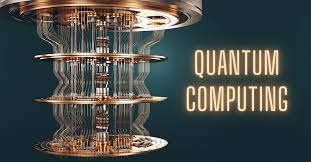
Quantum computing isn’t just another tech buzzword — it’s the next massive leap in human innovation. For decades, traditional computers have helped us solve problems, build industries, and power our digital world. But now, a new frontier is emerging, one that promises to reshape every major industry on the planet. Quantum computing is faster, smarter, and far more powerful than anything we’ve seen before. And while it might sound like science fiction, it’s becoming very real, very quickly.
Imagine solving in seconds a problem that would take today’s fastest supercomputer thousands of years. Imagine drug discovery happening 50 times faster. Imagine cybersecurity so strong that hackers can’t break it — or so weak that existing encryption becomes useless overnight. That’s the world quantum computing is bringing.
In this article, we’ll dive deep into how quantum computers work, why they matter, where they’re headed, and—most importantly—how they will transform the digital world as we know it.
Understanding Quantum Computing
What Makes Quantum Computers Different?
Traditional computers use bits — zeros and ones. Simple, rigid, predictable.
Quantum computers use qubits, which can be:
- 0
- 1
- or both at the same time
This phenomenon is called superposition, and it’s the reason quantum computers can explore countless possibilities simultaneously.
The Power of Entanglement
Entanglement means qubits can be connected in ways classical bits cannot. When one qubit changes, the other instantly reacts — even across long distances. This allows quantum systems to process information at speeds that make today’s computers look like calculators from the 1980s.
Quantum vs. Classical Computing: A Simple Analogy
Think of a classical computer as reading a book word by word.
A quantum computer?
It reads every page at the same time.
Why Quantum Computing Is a Game Changer
Solving Problems Too Complex for Classical Computers
Quantum systems can handle complex calculations involving chemistry, physics, cryptography, and optimization with unmatched speed.
New Possibilities Across Every Industry
Quantum computing isn’t just a tech upgrade. It’s an innovation that will touch:
- Medicine
- Finance
- Artificial intelligence
- Space exploration
- Climate science
- Cybersecurity
- Manufacturing
- Agriculture
The potential is enormous.
Industries Quantum Computers Will Transform
1. Medicine and Drug Discovery
Faster Development of Treatments
Quantum systems can simulate how molecules behave at the atomic level, allowing researchers to:
- Test drugs virtually
- Discover new treatments
- Reduce development time from years to months
Personalized Medicine
Quantum-powered AI could analyze your unique DNA, predicting:
- Which medications work best for you
- Which diseases you may be prone to
- How to tailor treatments to your biology
2. Finance and Banking
Smarter Predictions
Quantum-enhanced algorithms improve:
- Stock analysis
- Market forecasting
- Risk assessment
Portfolio Optimization
Quantum tools can evaluate millions of combinations in seconds, giving investors more efficient strategies.
3. Cybersecurity
Breaking Current Encryption
Quantum computers can break today’s encryption methods in hours — a scary thought.
Building Quantum-Safe Security
New encryption systems (like post-quantum cryptography) are being developed to protect data in the quantum era.
4. Artificial Intelligence
Quantum computing accelerates AI training massively.
This means:
- Smarter robots
- Faster machine learning
- More advanced problem-solving
- Real-time AI analysis
Imagine AI models training in minutes instead of weeks.
5. Climate and Environmental Science
Climate models involve millions of variables. Quantum computers can simulate environmental processes and help create:
- Better weather predictions
- Stronger disaster management systems
- More accurate climate projections
6. Manufacturing and Logistics
Optimization at a New Level
Quantum systems can optimize:
- Supply chains
- Manufacturing workflows
- Shipping routes
- Material usage
Creating Stronger Materials
Quantum simulations help scientists design:
- Lightweight metals
- More efficient batteries
- Stronger building materials
Challenges Quantum Computing Still Faces
1. Stability Problems
Qubits are extremely sensitive to their environment. Noise can disrupt calculations easily.
2. High Costs
Quantum computers require:
- Ultra-low temperatures
- Vacuum environments
- Specialized facilities
This tech isn’t cheap—yet.
3. Lack of Skilled Talent
Quantum technology requires experts in physics, math, and advanced engineering. There aren’t many available today.
4. Encryption Risks
The biggest risk?
Quantum computers may one day break nearly all modern encryption.
The Current State of Quantum Computing
Major Tech Companies Leading the Race
The biggest quantum players include:
- IBM
- Microsoft
- Amazon
- Intel
- Rigetti
- D-Wave
These companies are racing to build scalable quantum systems.
Quantum-as-a-Service (QaaS)
Cloud platforms now offer access to quantum computers so businesses can experiment without owning a machine.
What Quantum Computing Means for Everyday People
Faster Internet and Smarter Apps
Quantum algorithms will eventually improve:
- Navigation apps
- Translation tools
- Online shopping recommendations
Better Banking Security
Banks will adopt quantum-safe encryption to protect your data.
Healthcare Breakthroughs
Common diseases may be treated faster thanks to quantum-driven drug discovery.
Preparing for the Quantum Future
Businesses Need to Start Learning Now
Companies must:
- Train employees
- Analyze industry risks
- Prepare for quantum cybersecurity
- Explore quantum algorithms relevant to their field
Governments Are Already Building Quantum Policies
Countries like the U.S., China, Canada, and Germany are competing to dominate quantum technology.
Will Quantum Computers Replace Classical Computers?
No — not at all.
Quantum computers will complement classical systems, not replace them.
Classical systems are great for:
- Day-to-day tasks
- Browsing
- Gaming
- Office work
Quantum computers are for:
- Complex scientific simulations
- Cryptography
- AI acceleration
- Optimization problems
Both will coexist.
The Future of Quantum Computing
Over the next decade, you can expect:
- More powerful qubit systems
- Practical quantum applications
- Quantum-safe encryption replacing old systems
- Industries integrating quantum solutions
- AI supercharging quantum development
Quantum computing is moving fast — faster than most people realize.
Conclusion
Quantum computing is more than a technological upgrade — it’s a revolution. It’s set to transform industries, solve impossible problems, speed up scientific discoveries, and push human innovation into a new level. While challenges remain, the breakthroughs happening today show that quantum computing will soon be part of everyday life. The companies, governments, and individuals who prepare now will be the leaders of tomorrow. The quantum era is coming — and the digital world will never be the same.
FAQs
1. Is quantum computing already being used?
Yes — companies use early-stage quantum computers through cloud platforms.
2. Can quantum computers replace traditional computers?
No, they are specialized machines for complex calculations.
3. When will quantum computing become mainstream?
Most experts estimate within 10–15 years for widespread use.
4. Will quantum computers break encryption?
They may break current encryption, which is why quantum-safe systems are being developed.
5. Can I learn quantum computing as a beginner?
Absolutely! Starting with basics in computer science, math, and physics is enough to begin.