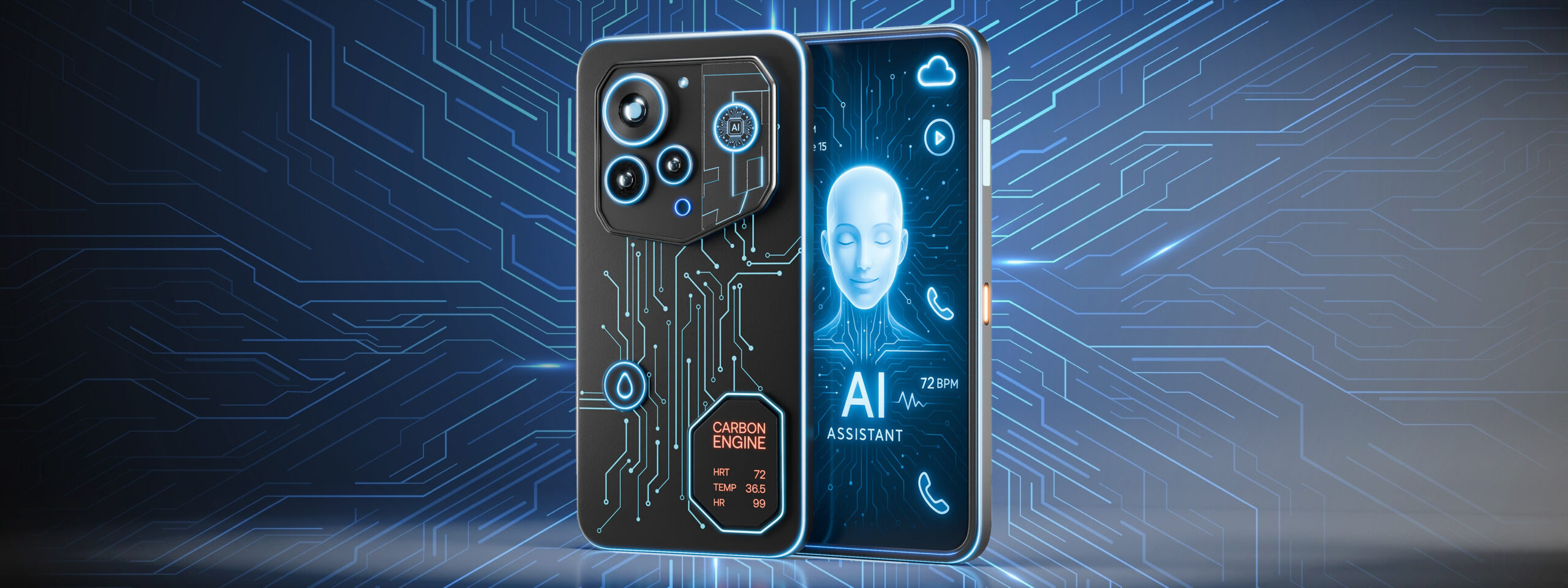
Smartphones have evolved from simple communication tools into powerful personal assistants that run our entire lives. From messaging and browsing to fitness tracking, banking, photography, and even work, smartphones have become an extension of who we are. But the real question is: what comes next?
The next decade of smartphone technology will be nothing short of revolutionary. We’re talking about foldable screens that feel like paper, cameras that outperform professional gear, batteries that last for weeks, AI that anticipates your needs, and connectivity so fast you won’t even see a loading screen. The future smartphone won’t just be a device — it will be a seamless blend of AI, augmented reality, biometrics, and futuristic materials.
In this article, we’ll explore the innovations that will redefine smartphones over the next 10 years, how they will impact your daily life, and why the future of mobile technology is more exciting than ever.
Where Smartphone Technology Is Heading
1. The End of Flat Screens
The age of flat, rigid smartphone screens is slowly ending. Flexible displays opened the door, and now the possibilities are expanding.
Foldable Phones
We already see tons of foldable models, but the next decade will make them:
- Cheaper
- More durable
- Crease-free
- Shock-resistant
Rollable Screens
Screens that extend and retract like a scroll will become the new trend. Imagine pulling your phone outward to double its size into a tablet.
Stretchable Displays
These can expand and shrink like elastic. This could lead to devices that morph into different shapes depending on the task.
2. AI as the Brain, Not Just a Feature
AI will stop being a “feature” and become the core of the smartphone experience.
Predictive AI
Your phone will anticipate:
- What you want to type
- Which apps you need
- Your schedule
- Your habits
- Your emotions
AI-Powered Camera Smartness
Your camera will:
- Auto-adjust in real-time
- Improve photo quality instantly
- Understand scenes and subjects
- Remove noise, shadows, distractions
Deeper Personalization
AI will create a fully personalized environment:
Apps, layout, notifications, brightness, and even battery usage will adapt to you.
3. Camera Technology That Will Replace Professional Gear
Smartphone cameras will surpass DSLR capabilities in many ways.
Mega-Sensor Evolution
Expect:
- 1-inch sensors becoming standard
- 3D depth mapping
- 3x–10x periscope zoom in a compact form
AI-Enhanced Videography
Phones will produce cinematic videos with:
- Real-time stabilization
- Automatic scene transitions
- Color grading
- Motion tracking
Holographic Photography
Some manufacturers are already testing 3D photo capture that doesn’t need glasses — imagine viewing a memory like a hologram.
4. Battery Life Revolution
One of the biggest complaints today? Battery life.
Solid-State Batteries
These will offer:
- Faster charging
- Longer lifespan
- Cooler temperatures
- Higher energy density
Graphene Batteries
Graphene-based cells can charge in minutes and last days.
Solar and Self-Charging Features
Some smartphones will use:
- Solar panels
- Kinetic charging (motion-based)
- Thermoelectric charging (body heat)
The future phone might barely need a charger.
5. Ultra-Fast Connectivity
We’re already embracing 5G, but the next decade will introduce:
6G Networks
Offering:
- Zero-lag communication
- 1 TBPS speeds
- Extreme cloud integration
- Instant live translation
- Real-time VR/AR
Satellite Integration
Phones will connect anywhere — forests, oceans, deserts — without cell towers.
6. Augmented Reality Takes Over
AR will become a standard smartphone feature.
AR Glasses Integration
Your phone will act as the processing unit for AR glasses:
- Holographic notifications
- Virtual displays
- 3D navigation
- Real-time translation
AR Shopping
Try on clothes, furniture, makeup — all virtually.
AR Gaming and Learning
Games will blend with real-world environments, and learning apps will project 3D models into your space.
7. Security Will Go Beyond Face ID
Biometrics are getting smarter and more secure.
DNA-Based Authentication
Unlock your phone using chemical signatures from your skin.
Heartbeat Recognition
Your unique heart rhythm could become your password.
Palm Vein Scanning
Already used in advanced security systems, palm vein ID may soon reach smartphones.
8. The Rise of Eco-Friendly Smartphones
Sustainability will define the next decade.
Recyclable Components
Phones will be easier to repair and recycle.
Modular Designs
Replaceable parts (battery, camera, display) will extend lifespan.
Biodegradable Materials
Some companies are already experimenting with plant-based casings.
9. Holographic Displays and 3D Interfaces
Imagine projecting a hologram from your phone.
This isn’t sci-fi — prototypes already exist.
Holographic Video Calls
Talk to someone as if they’re standing in front of you.
3D Interfaces
Apps and menus will pop out of the screen with depth and realism.
10. Seamless Integration With Everything
Smartphones will become the universal hub for your digital life.
Your Phone Will Control Your Home
Lights, locks, appliances, thermostats — all connected.
Your Phone Will Be Your Wallet
Digital IDs, licenses, passports, and payment systems will replace physical documents.
Your Phone Will Replace Your Laptop
Flexible screens + desktop modes will allow smartphones to become full computers.
How These Innovations Will Change Your Daily Life
1. Faster, Smarter, More Efficient Days
Your phone will automate boring tasks:
- Scheduling
- Messaging replies
- Browsing
- Shopping
2. Health Tracking Becomes Real-Time
Your phone will warn you of:
- Early illness symptoms
- Stress spikes
- Sleep abnormalities
- Dangerous heart rates
3. Better Communication
Holograms, real-time translation, and AR messaging will bridge global communication.
4. More Personalized Entertainment
Your phone will tailor:
- Music playlists
- Movie recommendations
- News feeds
- Gaming experiences
Challenges Ahead for Future Smartphones
1. Privacy Concerns
More sensors = more data collection.
2. Higher Costs
Advanced features could increase device prices.
3. E-Waste Issues
Rapid innovation may cause more discarded devices.
4. Security Risks
AI-powered phones could be targeted by smarter cyberattacks.
Adapting to the Future
To stay prepared:
- Understand privacy settings
- Update apps regularly
- Use strong biometric options
- Stay informed about new tech
- Embrace new features gradually
Conclusion
The future of smartphones will be nothing short of extraordinary. They’ll be smarter, faster, safer, and more immersive than anything we’ve seen before. From foldable screens and graphene batteries to holography and AI-driven personalization, smartphones are heading toward a future where they’re not just tools — they’re digital companions that understand you, adapt to you, and enhance every part of your life.
The next decade won’t just upgrade smartphones — it will redefine how humans interact with technology. And we’re only at the beginning.
FAQs
1. Will smartphones disappear in the future?
Possibly — AR glasses may replace them eventually, but not for at least 10–15 years.
2. Are foldable and rollable phones the new standard?
Yes, they will become more common as prices drop.
3. Will AI completely control future smartphones?
AI will assist and automate tasks, not replace human control.
4. How long will smartphone batteries last in the future?
Solid-state and graphene batteries may offer days or even weeks of use.
5. Will the internet get faster?
With 6G and satellite connectivity, loading screens may become a thing of the past.